Ladies Market > Pictures of Ladies' Market in Mong Kok
Pictures of Ladies' Market in Mong Kok
Ladies' Market is the name that has stuck to Tung Choi Street between Argyle Street and Dundas Street in Mong Kok, where the stalls stand for most of the day and take up most of the width of the road. The photographs on this page follow the same street from the morning set-up to the evening crowd. They are here to answer what it is actually like to walk it: how much road is left once the stalls are out, what is on sale, and why the same lane feels like a different place at midday and after dark.
Before the stalls open
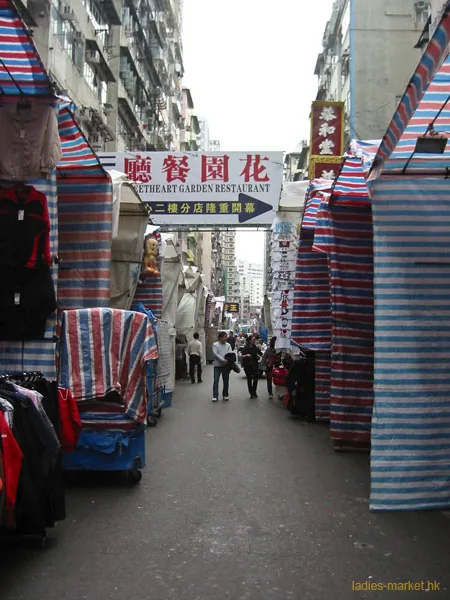
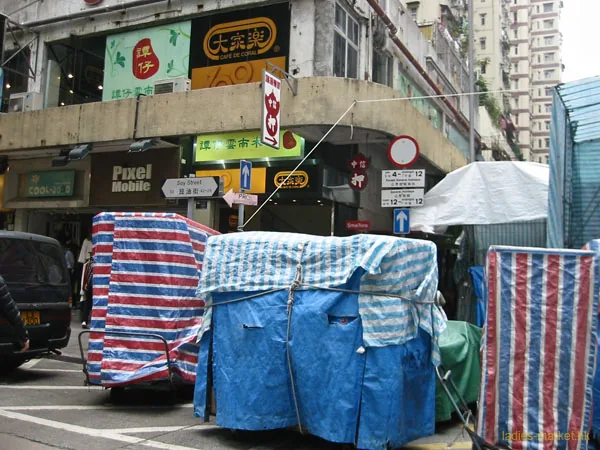
Each stall is packed away whole at night, so the first job before the noon opening is to raise the iron frame and lash the canvas back on. The red, white and blue sheeting is the thing to look up for: many of the stalls use it, and it is easiest to see before the goods are hung over it. The morning set-up picture shows the frames standing with the first products going out onto them.
The stock does not live in the street. It arrives before the noon opening by trolley from nearby flats and shops that are used as overnight storage, and it is carted back the same way late in the evening. Early on, that is most of what you will see — a stall half dressed, and a restaurant front behind it that will be hidden by the afternoon.
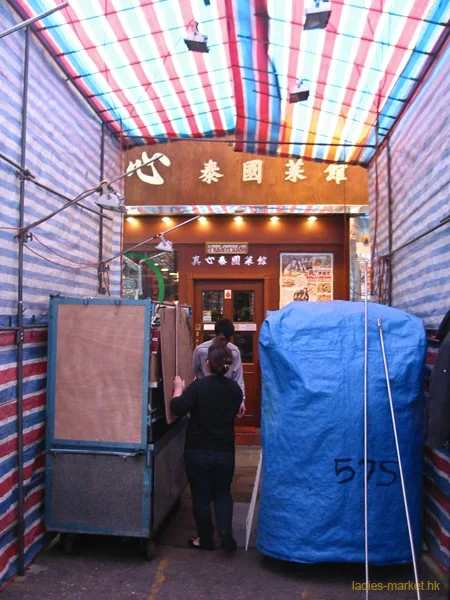
The restaurant behind this stall is one of the Chinese restaurants that line the street. Once the stalls in front of it are dressed and the shoppers arrive, that shopfront is almost entirely hidden from the road.
What the walkway is like once the stalls are out
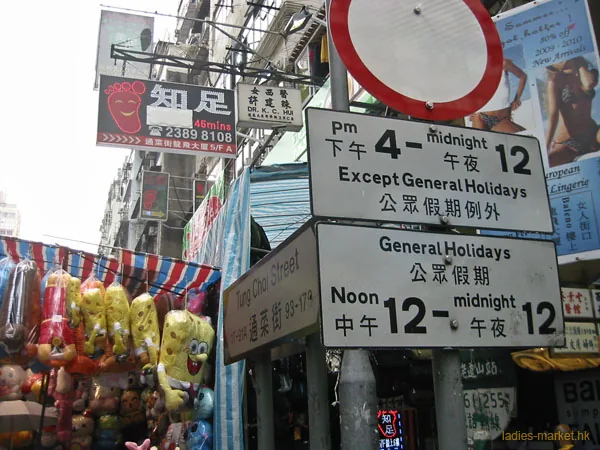
For much of the afternoon and evening — from 4pm Monday to Saturday and from noon on Sundays and public holidays — Tung Choi Street is closed to vehicles, which is why the stalls can spread across the full width of the roadway. The picture of the closed road is what that looks like from inside the market.
Two timetables are at work here, and it is worth keeping them apart. The road closes in the afternoon from Monday to Saturday and at noon on Sundays, and stays closed until midnight; the stalls are licensed from noon to 11pm every day. Late on a Sunday evening you are walking a car-free street while most vendors are packing up. Opening hours sets out both.
Once the stalls are out, the way through is the narrow lane down the middle. From the 12:00 noon licence start the street is effectively impassable except along that lane. What changes later is not the width of the gap but the number of people in it: later in the day, the lane is the same size and the walking is much slower.
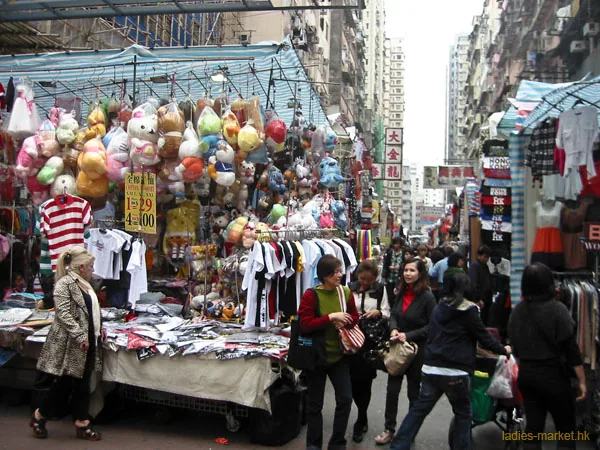
The lane is kept just wide enough for a fire engine to get down between the stalls, and that is deliberate rather than incidental: there have been fires in this street, and the clearance is maintained so the fire service is never blocked. That gap is kept whatever else is going on in the market.
You may also be stopped by someone dressed as a monk asking for a donation. No real monk collects money like that in the street; treat it as begging.
Clothes, bags and the sizing question
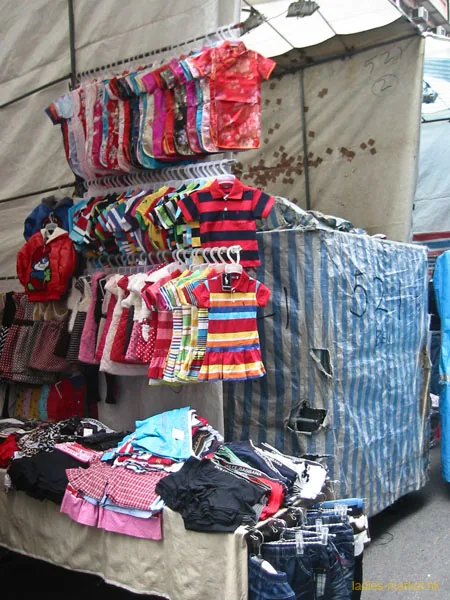
Children's clothing is one of the stronger sections of the market, in traditional Chinese styles as well as modern western ones. There is no fitting room and no changing space at an open stall: the usual move is to hold the garment up against the child, and the sizes printed inside follow more than one sizing system, so the label alone will not tell you whether it fits. Tell the stall holder the age of the child and they can pick the size for you.
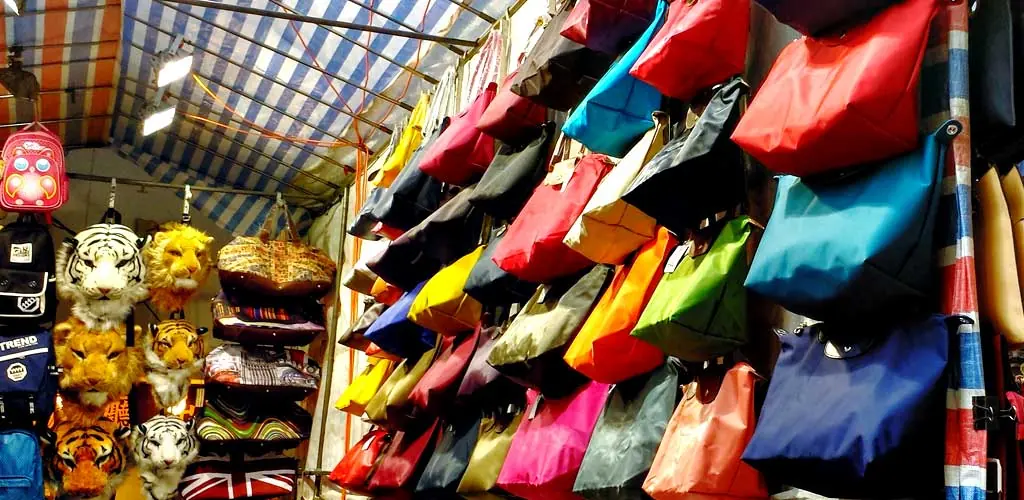
Adult clothing runs from the practical to the opposite: a stall of plain leather handbags can sit directly beside one selling flashy dresses and tops for a night out. Bags and luggage are everywhere — handbags, shoulder bags, backpacks, hard and soft suitcases — and plenty of shoppers arrive with an empty case to fill. The site's price guide covers what clothes, bags and souvenirs cost; the photographs here are about what you are looking at, not the numbers.
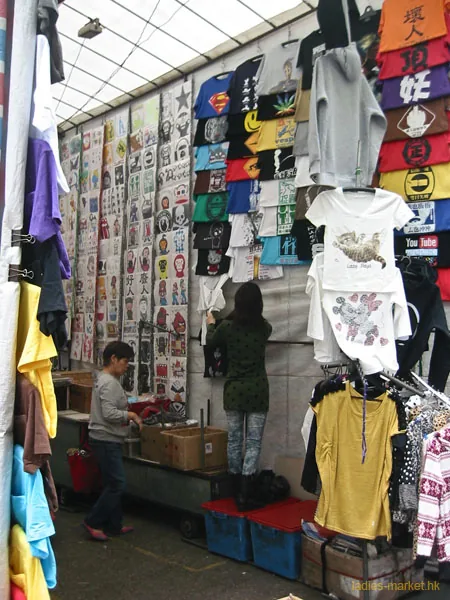
Printed T-shirts are a big item, and several stalls will iron a transfer of your choosing onto a shirt while you wait. It is quick and the choice of design, size and colour is wide, but a transfer is not the same garment as a printed shirt: it fades, and the design can tear. If that matters, buy the printed one — the next stall along sells them.
Souvenirs, jade and toys
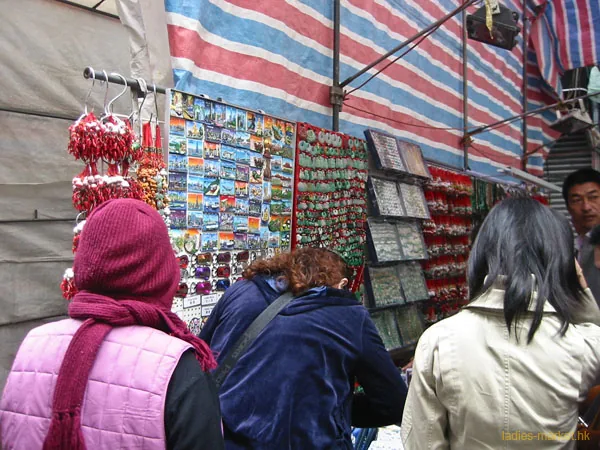
A few stalls are given over entirely to souvenirs: jade pieces, fridge magnets with Hong Kong views, keyrings and small trinkets. The jade on them is decorative rather than valuable. A market like this is not where you buy a stone for its quality — the nearby Jade Market is where that is done — so pick the pieces for the design.
For children the range is wider than it first looks: soft toys and oversized plush animals, small toys, novelty items, reproduction Hong Kong street signs sold as souvenirs, and T-shirts cut for kids as well as adults. What to buy at Ladies Market takes each of those categories in more detail.
Food and the shops behind the stalls
The street is not only stalls. Shops and restaurants line it behind them, and before the stalls are dressed the shopfronts behind them are visible. Local fast-food places do their business at lunch with rice boxes as well as eat-in tables; the wall menus carry pictures, which does most of the connecting where English is thin, and chain restaurants carry English descriptions as well.
The same street at 12:00 noon and at 8pm
At 12:00 noon the licence has just started and the street is still being built: some pitches are still being assembled, with frames going up and goods still to come out. By early afternoon the market is one of the busiest parts of Mong Kok, which is itself one of the busiest districts in Hong Kong. By evening the lane is full and you move at the speed of the person in front of you.
Which visit is better depends on what you came for. A market where you can see the stock and talk to a vendor is a midday market; the compressed, lit, loud version is the evening one. Both are the same stretch of Tung Choi Street.